
Hidden just off Freedom Square, at 7 Dadiani Street, there is a place that feels completely out of scale with the city around it. Yota Royal Gallery sits in a modest basement, slightly worn, a bit raw, and easy to miss. But inside, it opens into something unexpectedly rich.
The space doesn’t impress through design or polish. It works through detail. Thousands of miniature tin figures, carefully crafted and arranged, build entire historical scenes. The effect is immediate. You step in, and your attention narrows. Everything becomes about precision, composition, and narrative.
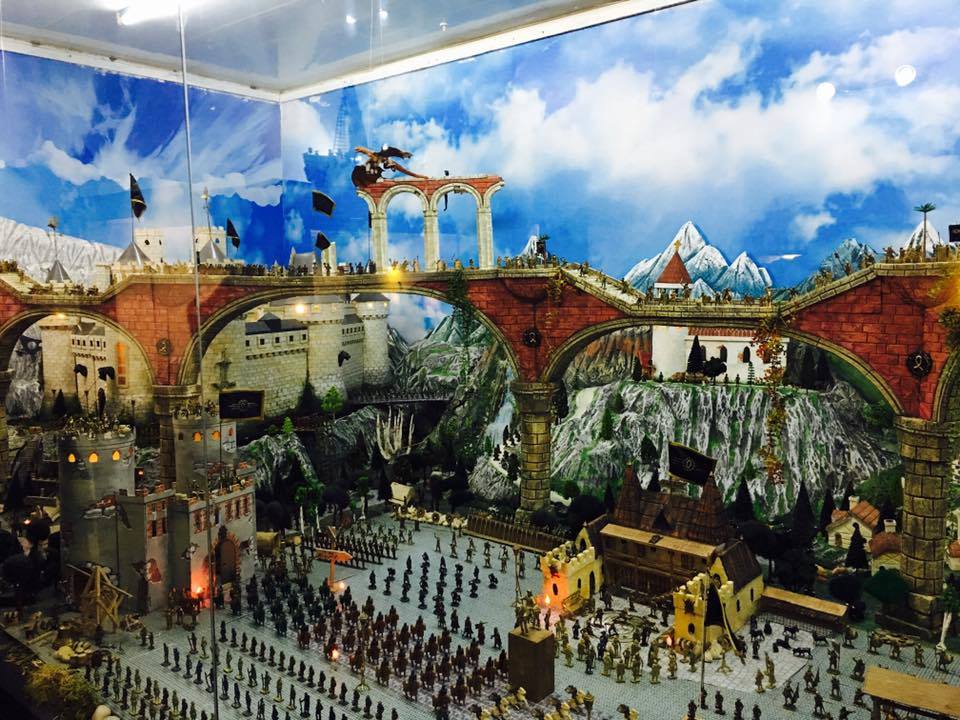
The comparison that comes to mind is Madame Tussauds, but here the scale is reversed. Instead of life-size spectacle, the focus is on the miniature. It feels more intimate, more concentrated.
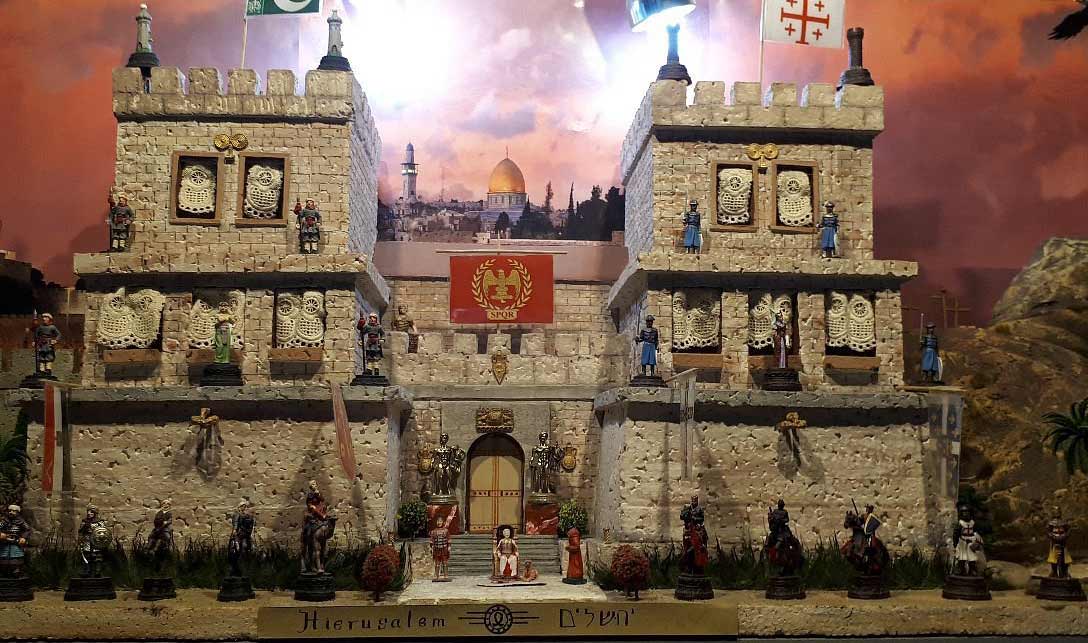
Most of the figures are soldiers, drawn from different periods and cultures. They are arranged not randomly, but as structured scenes that echo real historical events. In that sense, the display works almost like a visual archive. History is not described, it is staged.
There is also a strong sense of craftsmanship. Each figure carries a level of detail that suggests time, patience, and a deep personal investment. This is not mass production. It is closer to atelier work, where repetition becomes refinement.
The experience shifts the way history is perceived. Instead of distant dates and abstract narratives, everything becomes physical and visible. You see formations, gestures, relationships between figures. The past feels constructed, almost like a set.
The idea itself has a long lineage. Miniature soldiers were once used as tools, not toys. Military leaders, including figures like Maurice of Orange and William of Orange, used small-scale models to plan battles. Strategy was rehearsed through objects placed on a table. The gallery echoes that logic, but transforms it into a cultural display.
What makes this place stand out is its clarity. It does not try to compete with large institutions. It stays focused, almost quiet, and lets the work speak.
At the center of it is a family. Grigol Robakidze developed the concept and built the structure of the exhibition. Irma supports the process, while Nana guides visitors through the collection, adding context and narrative.
Their approach is direct. The gallery is not positioned as a commercial project. It exists to be seen, to be used, to be shared. There is even a proposal to transfer it to the state, turning it into part of a broader educational system if the right conditions are created.
That idea feels relevant. The gallery already functions as an informal learning space. It engages attention without forcing it. It presents history in a way that feels immediate and accessible.
In a city that often reveals itself through scale and contrast, Yota Royal Gallery works in the opposite direction. It reduces everything to the smallest possible format, and in doing so, makes it easier to see.