
There are moments when a city briefly shifts its visual identity. For a couple of days, Tbilisi steps into a different aesthetic – softer, more delicate, almost cinematic.
On April 4–5, the National Botanical Garden of Georgia will host the annual Sakura Blossom Days festival, supported by Embassy of Japan in Georgia. Now in its sixth edition, the event has quietly become one of the most visually distinct cultural moments of the season.
At the center of it all is the idea of atmosphere. Sakura season isn’t just about flowers – it’s about mood, detail, and a certain kind of minimal beauty. That same feeling carries through the festival’s program.
Across the garden, visitors will move through a series of curated experiences: handmade objects, anime-inspired visuals, and presentations of Japanese literature. Each element adds a layer, building a space that feels almost like an installation rather than a traditional event.
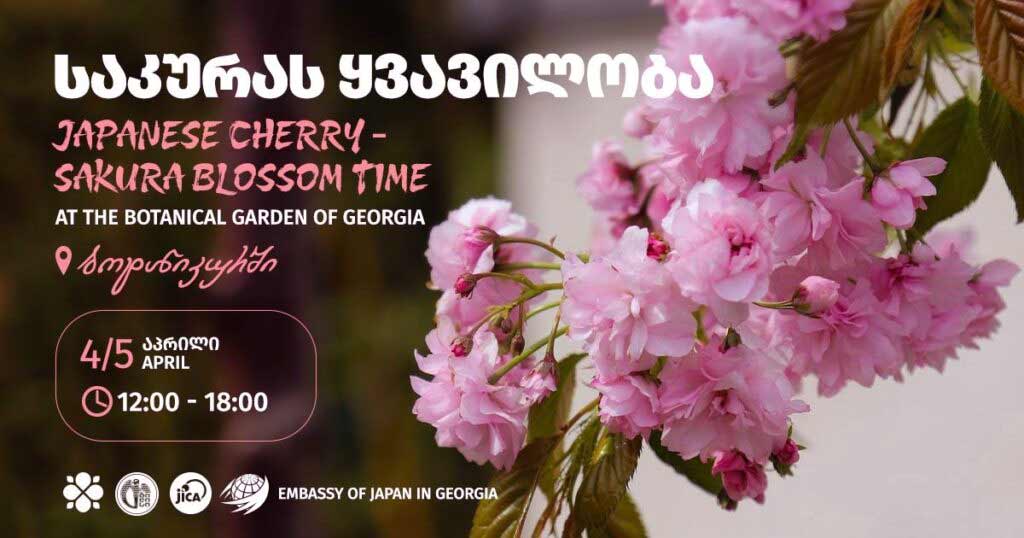
Workshops play an important role here. Origami and shodō – Japanese calligraphy – bring attention back to gesture and precision. In both, the process matters as much as the result. A fold, a line, a movement – everything is intentional, almost like constructing a silhouette in fashion.
Performance adds another dimension. Traditional dance introduces rhythm and structure, reinforcing the idea that culture, like style, exists in motion.
April 5 leans further into ritual. The day opens with a traditional tea ceremony – a practice built on control, timing, and balance. It’s followed by masterclasses in sushi-making and kintsugi, the art of repairing ceramics with visible seams.
Kintsugi, in particular, feels especially relevant. Instead of hiding damage, it highlights it – turning imperfection into part of the final form. It’s an idea that resonates far beyond craft, echoing current approaches in both art and fashion, where flaws become identity.
What makes this festival stand out is its coherence. It’s not just a collection of activities, but a consistent visual and cultural language. A temporary shift in how the city feels and looks.
For Tbilisi, events like this create moments of contrast – where local context meets global aesthetics. And for visitors, it’s a chance to experience culture not as something distant, but as something immersive and immediate.
For two days, the city softens. And under the sakura trees, everything feels just a little more considered.