
Some people drink coffee and move on. Others keep looking. For years, one Tbilisi-based photographer has been doing exactly that, treating the bottom of a cup not as an end, but as a beginning.
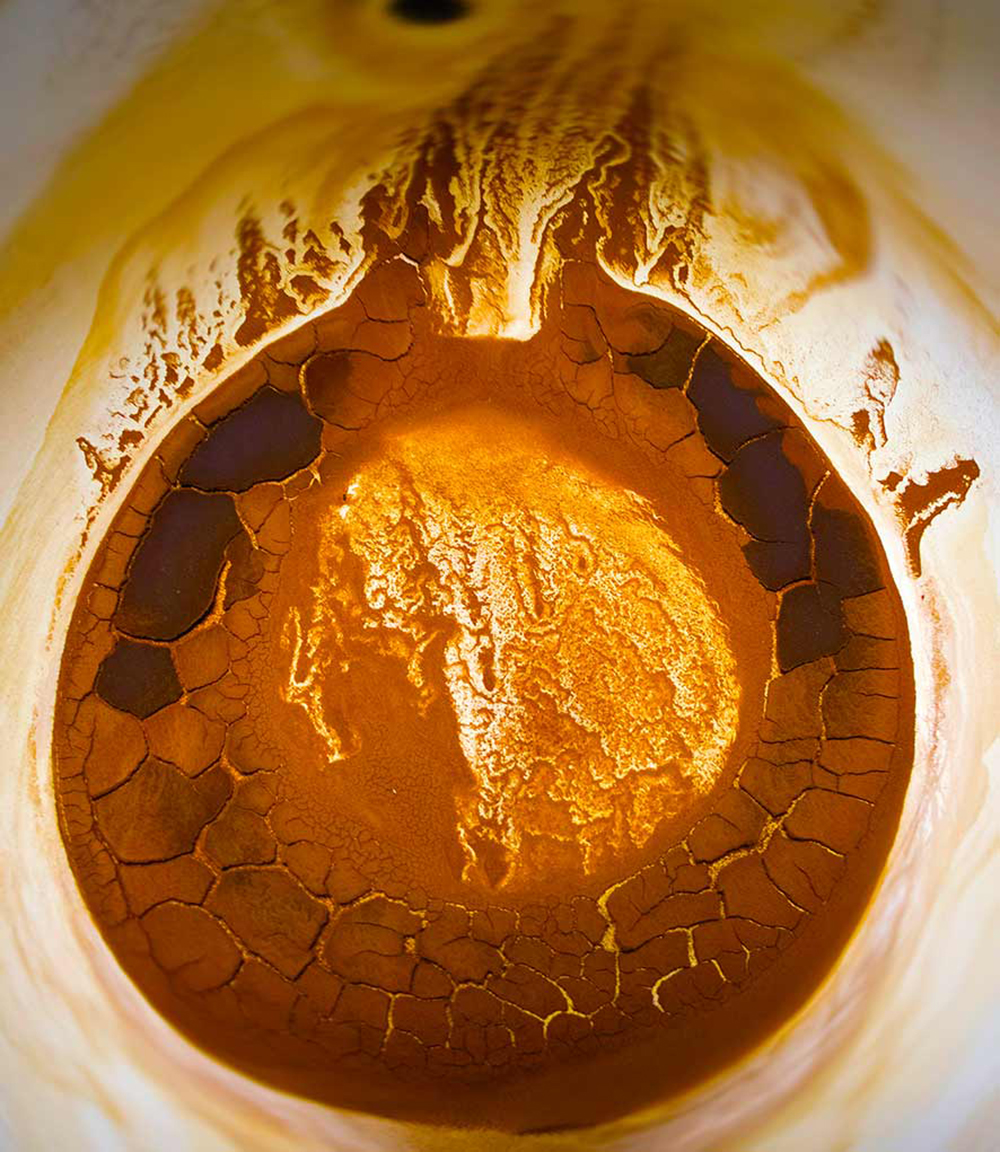
What remains after the last sip becomes material. Coffee grounds, shaped by chance and movement, start to suggest faces, figures, fragments of scenes. It’s not about prediction or symbolism. It’s about perception. The eye finds structure inside randomness.
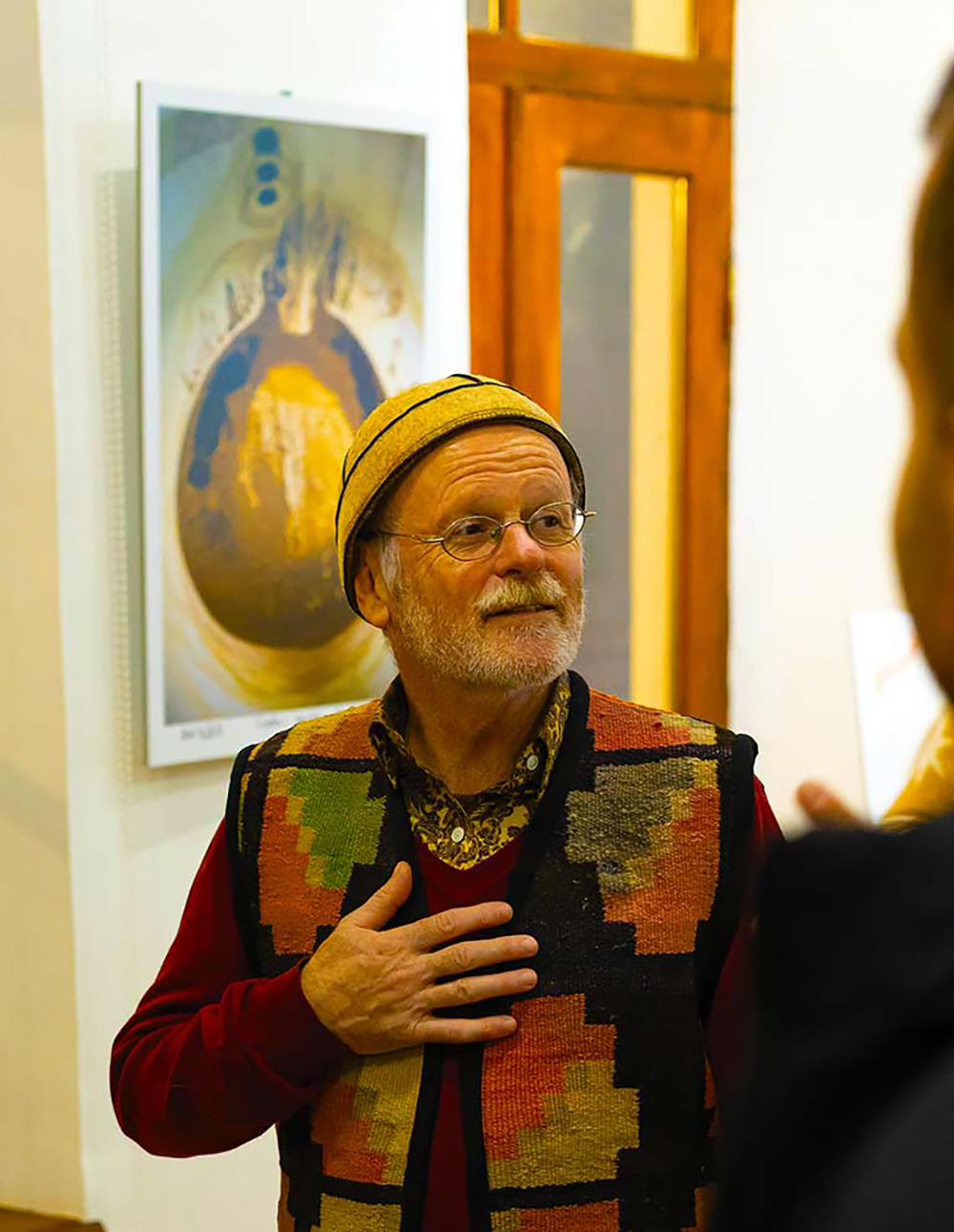
Over time, this habit turned into a growing archive of images. Eventually, it led to an exhibition at Corner House Coffee, a space that naturally connects everyday ritual with visual culture. Located on Aghmashenebeli Avenue, it provided the right context for a project built around coffee itself.
The selection process was collaborative. With the help of curator Michelle and a small team, the images were edited down to a series that could hold together as a show. Certain works stood out immediately. Not because they were technically perfect, but because they carried a strong visual pull.
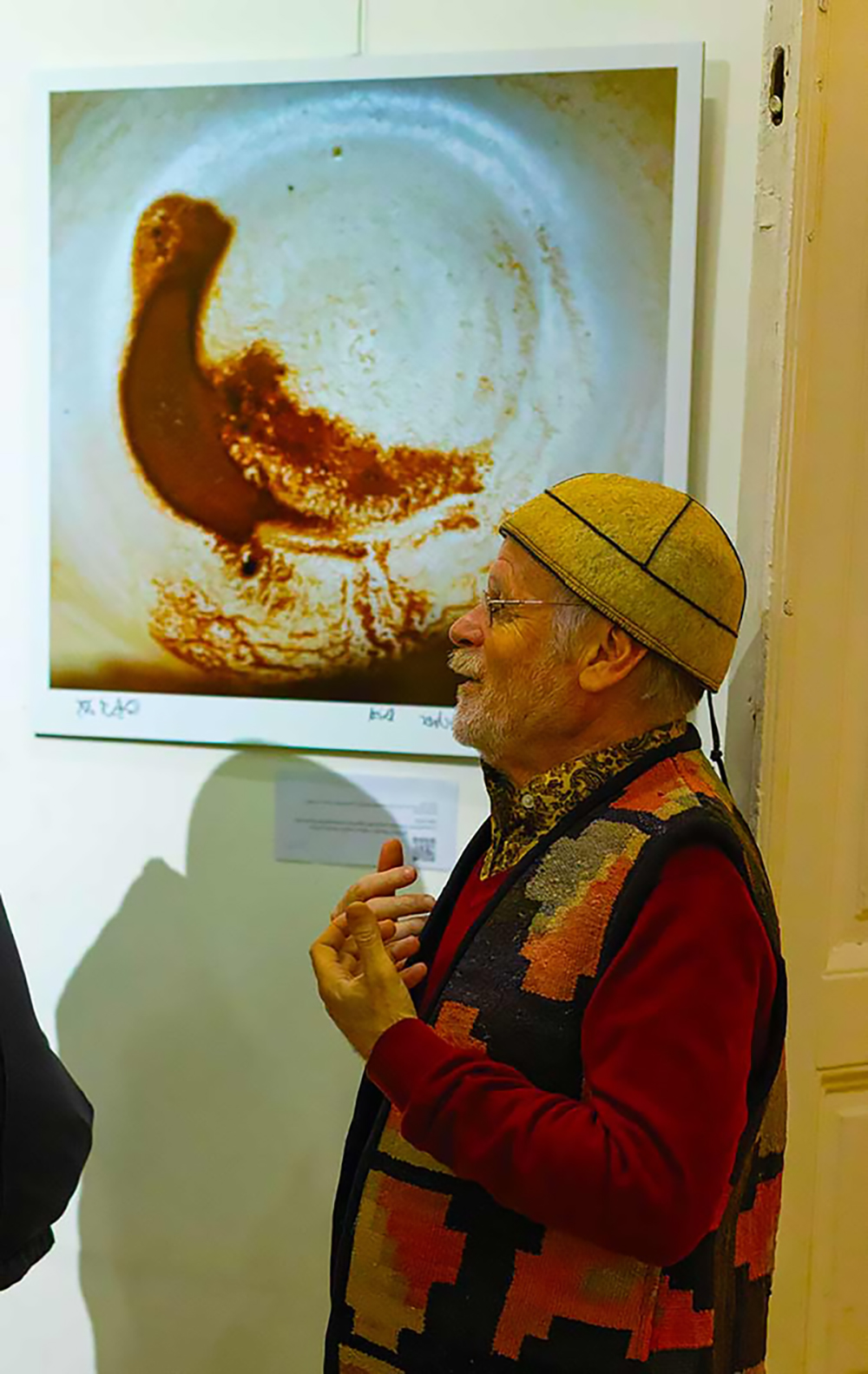
One image suggests a character straight out of graphic satire, caught in a surreal, almost absurd situation. Another, larger piece titled The Tyrant Dreams of Mushroom Clouds, moves in a darker direction. It is less playful, more unsettling. The kind of image that doesn’t resolve easily.
To preserve these moments, some prints were varnished. It’s a practical decision, but it also shifts the work into something more permanent. A fleeting pattern becomes an object.
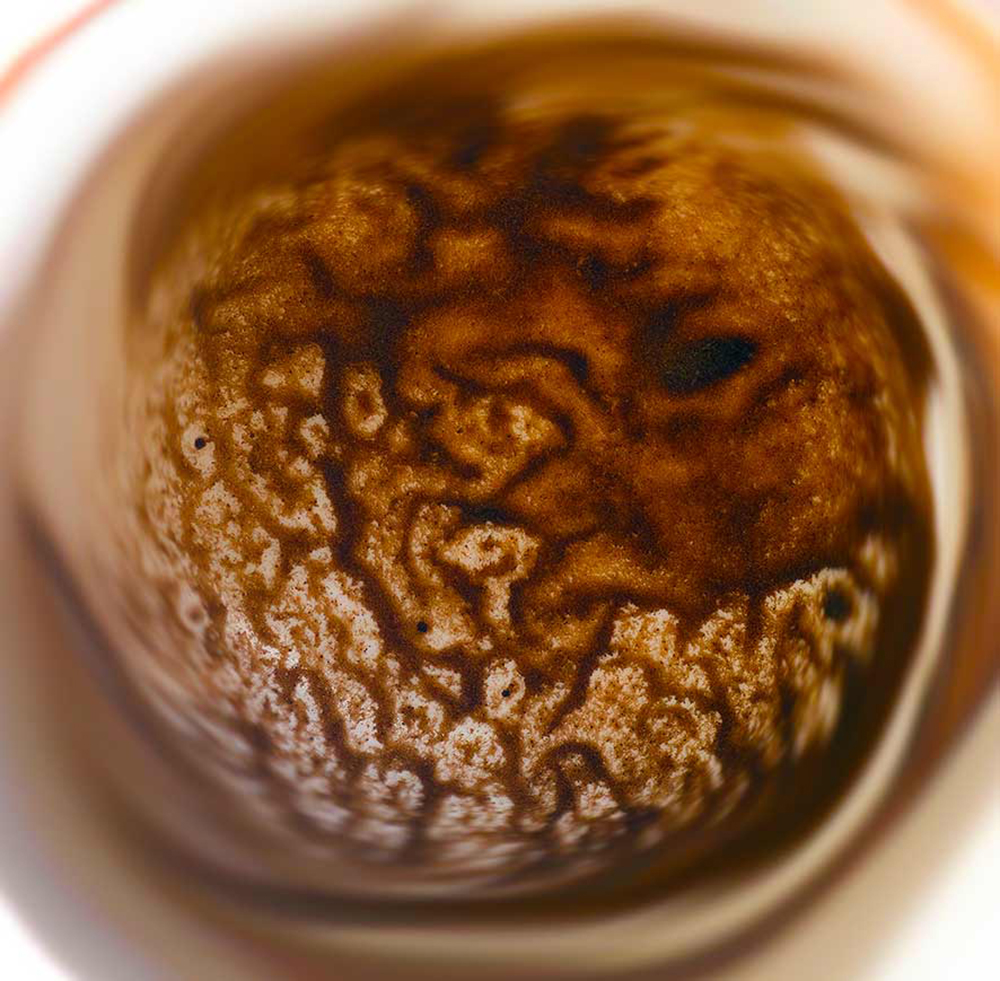
The exhibition itself was assembled quickly. Prints were produced near Freedom Square, mounted, and arranged in the gallery by theme. Animals, faces, abstract forms. The layout followed intuition rather than strict order.
One wall introduced a different element. A video installation showed cream moving through coffee in slow motion. Filmed in close detail, the liquid formed patterns that felt almost cosmic. The sequence was edited to run both forward and backward, turning a simple action into something slightly disorienting. The familiar became strange.
The opening drew a mixed crowd. Friends, acquaintances, and a few unexpected visitors. People moved through the space, reacting in different ways. Some engaged immediately, others seemed unsure how to read the images.
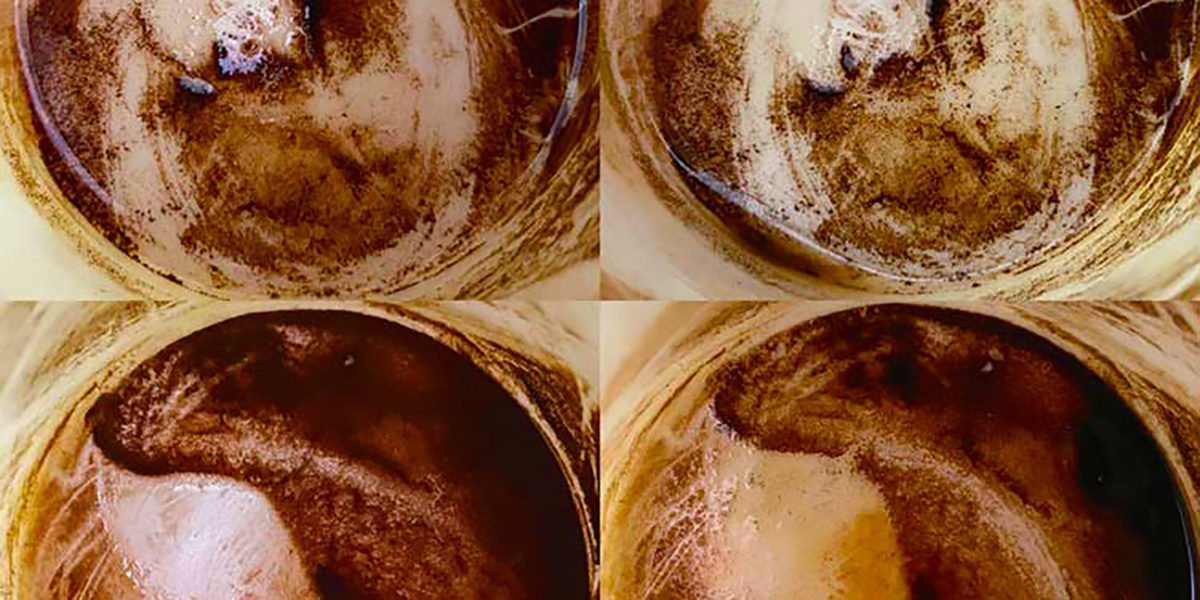
That uncertainty feels central to the project. It asks for a different kind of attention. Not everything is obvious. The images require time, or at least curiosity.
At its core, the exhibition is about shifting perspective. It takes something ordinary and insists on looking at it longer. Not for meaning in a traditional sense, but for possibility.
A coffee cup, emptied, becomes a surface again. And sometimes, if you look closely enough, it looks back.