
Some stories feel less like literature and more like atmosphere. Like something you can almost wear – layered, textured, shaped by time. Manana Kimeridze’s The Galata Triangle is exactly that kind of work.
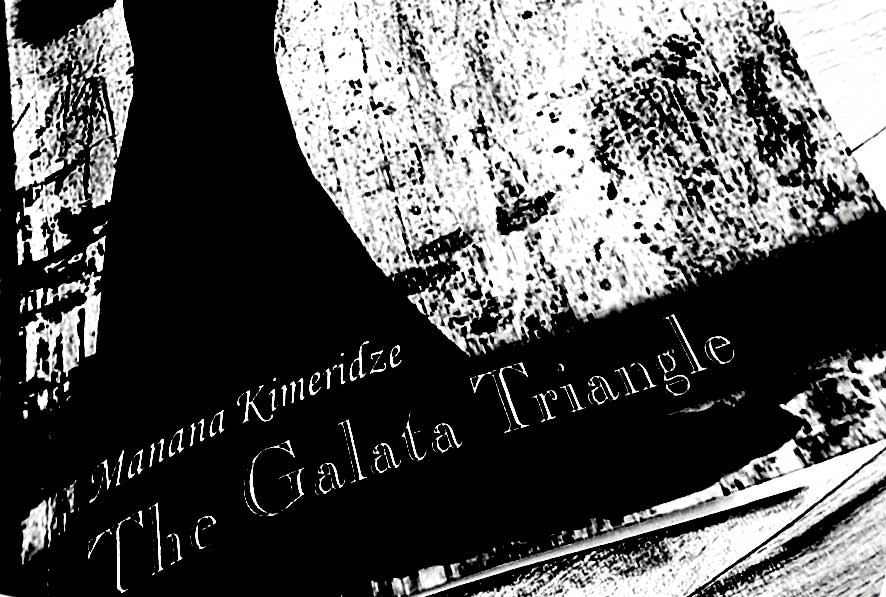
On February 16, 2026, the English edition of the novel – translated by Lela Abdushelishvili – will be presented at Prospero’s Books. The choice of place feels precise. Prospero’s has always been more than a bookstore – it’s a cultural space where different languages, identities, and histories exist side by side. A fitting setting for a novel built on displacement.
Kimeridze, born in Tbilisi and trained as a historian at Ivane Javakhishvili Tbilisi State University, has long worked with themes of time and memory. Across her books, time doesn’t move in a straight line – it folds, breaks, repeats. In The Galata Triangle, this idea becomes sharper, almost architectural.
The novel moves between Tiflis and Constantinople after World War I and the October Revolution. At first glance, it’s about people caught in historical change. But the deeper focus is on how that change feels – how it reshapes identity, like clothing that no longer fits.
There’s a strong visual quality to the writing. Almost cinematic. Scenes unfold like frames: narrow streets, dim light, worn textures. But what stands out most is the recurring image of the suitcase.
It becomes a kind of symbol – minimalism forced by history. Lives reduced to essentials. Identity edited down to what can be carried. There’s something very contemporary in that idea. Almost like a stripped-back aesthetic, where excess disappears and only the core remains.
The characters move through space like silhouettes. Aristocrats in faded coats, women in worn silk and damaged fur. Nothing feels polished. Everything carries traces of time. It’s not nostalgia – it’s erosion.
In this sense, the novel works almost like fashion storytelling. The focus isn’t just on what people wear, but on what those clothes reveal: status lost, identity shifting, history pressing in.
Time itself behaves like unstable material. It stretches, breaks, collapses. Kimeridze describes it as something that can wear out – like fabric under pressure. Once change begins, it can’t be controlled. The feeling is familiar: a world in transition, where nothing feels fixed.
The “triangle” in the title reads like a structure, but also like tension. Between Tbilisi, Constantinople, and memory. Between past, present, and imagined future. In architecture, a triangle creates stability. Here, it does the opposite – it holds everything in a fragile balance.
What makes the novel stand out is its restraint. There’s no dramatic statement, no heavy explanation. Instead, there’s distance. A quiet sense of disconnection – from place, from time, from meaning itself.
The English translation brings this story into a wider context. It connects Georgian writing to a broader conversation about exile and post-imperial identity. But the tone remains very specific – subtle, introspective, tied to the emotional weight of cities like Tbilisi.
Reading it now, the story feels current. The idea that history repeats itself – not exactly, but through patterns – runs through the book. Values shift quickly. Familiar structures disappear. What’s left is uncertainty.
And yet, the past never fully leaves. It stays in spaces, in objects, in details. In abandoned rooms. In old clocks still ticking.
The launch at Prospero’s Books feels less like a presentation and more like a continuation of this dialogue. A moment where past and present briefly align.
Because The Galata Triangle isn’t just about history. It’s about recurrence. About how certain feelings – displacement, instability, search for identity – keep returning.
The suitcase is always ready. The city is always shifting. And time, no matter how fractured, keeps moving forward.