
There are moments when traditional dance feels closer to fashion than performance. Not just because of the costumes, but because of how movement, rhythm, and fabric come together to create a full visual statement.
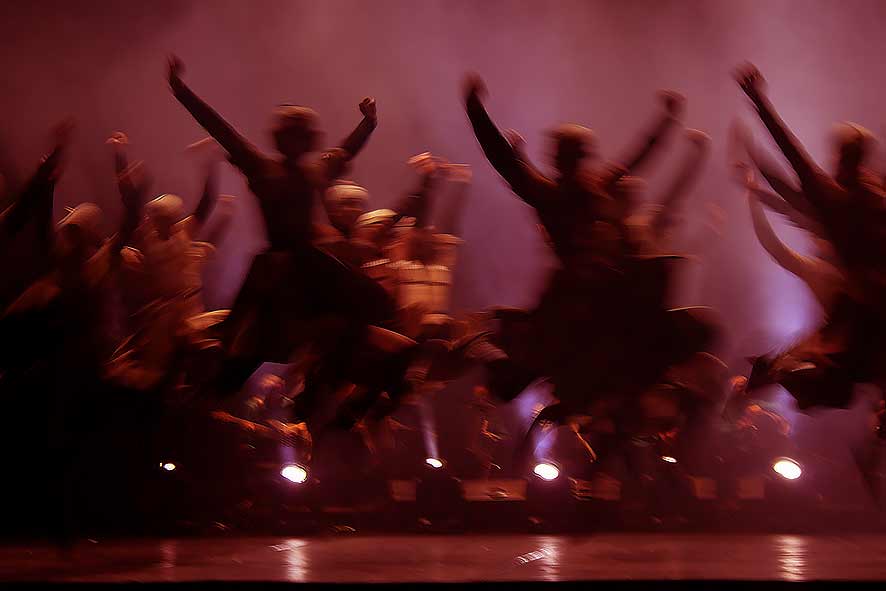
A recent evening in Tbilisi made that especially clear. The 20th anniversary concert of Kartuli Pesvebi took place at Griboedov Theater, right by Liberty Square. What unfolded felt less like a show and more like a layered presentation of Georgian identity – almost like a runway of regional traditions.
The music was fully live, which immediately changed the atmosphere. Seven musicians – drums, accordion, bass, duduk, strings – created a sound that felt textured and raw. It gave the performance depth, like the difference between fast fashion and something handcrafted.
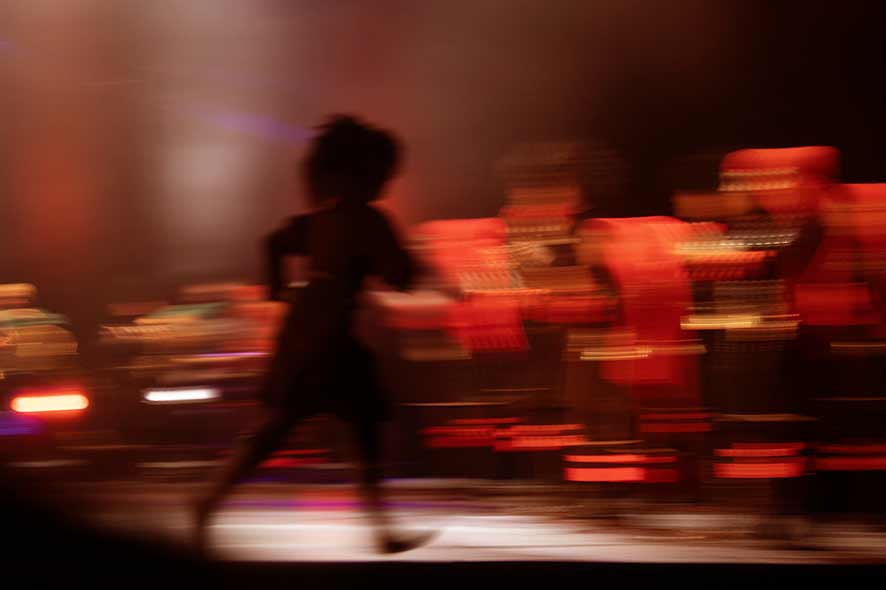
On stage, two groups – children and adults – moved through a wide spectrum of Georgian dances. Each region brought its own visual language: silhouettes, textures, and rhythms shifted constantly. Costumes played a central role here. Structured, ornate, sometimes strict, sometimes fluid – they didn’t just decorate the dancers, they defined them.
Midway through the evening, the program shifted. A set of Ukrainian dances appeared after the interval, performed in traditional dress and met with the same energy from the audience. It felt like a natural extension – a reminder that cultural identity, much like fashion, travels and evolves.
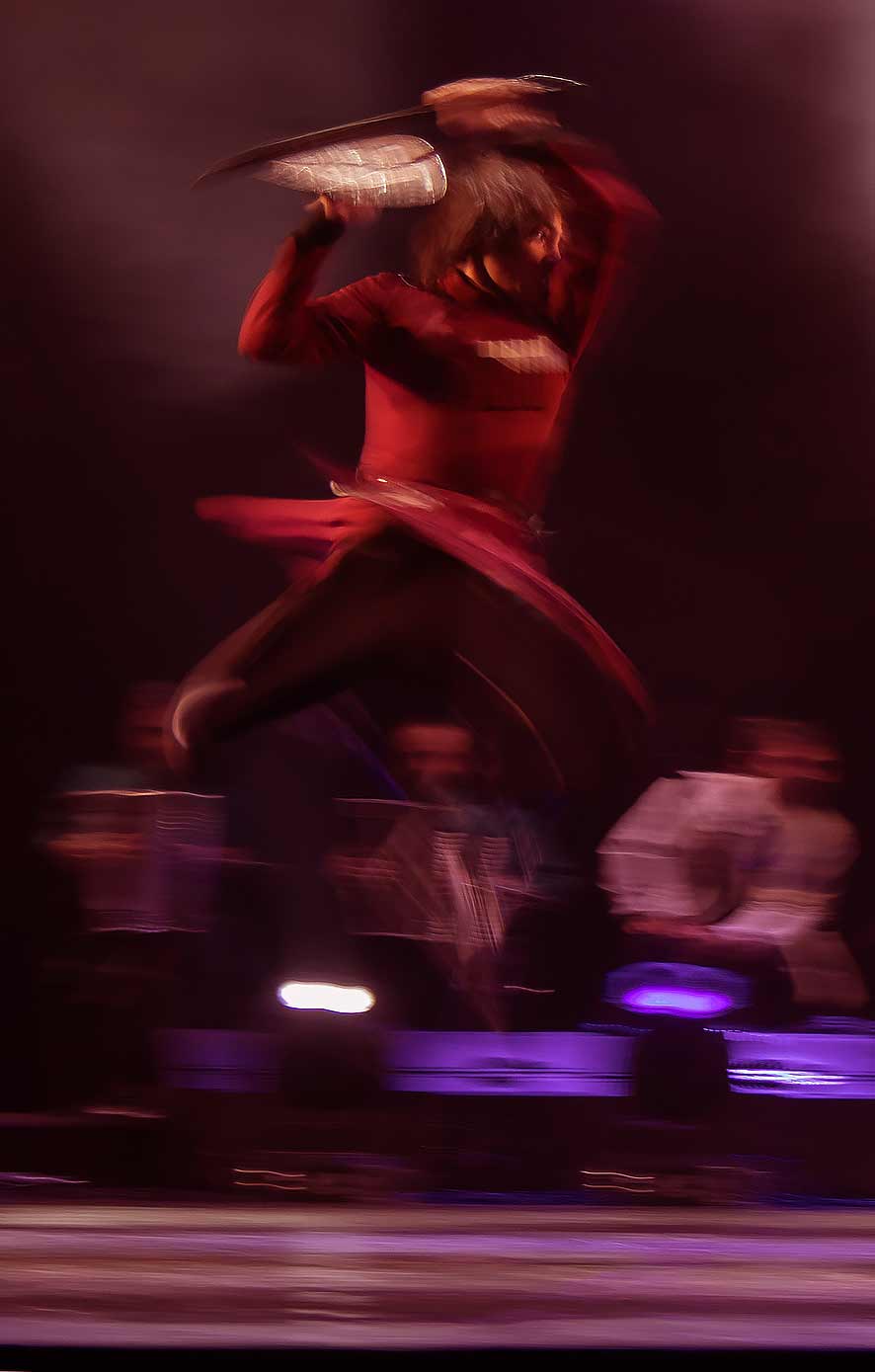
Watching it all, one thing became clear: dance is about motion in the same way fashion is about movement. Clothes are never static – they come alive only when worn, when they react to the body. The same applies here.
Trying to capture that in images becomes almost a creative act in itself. Instead of freezing the dancers in sharp frames, the focus shifts to motion – to blur, to flow. That’s where the real feeling lives. A perfectly crisp image might show the costume, but a blurred one reveals its energy.
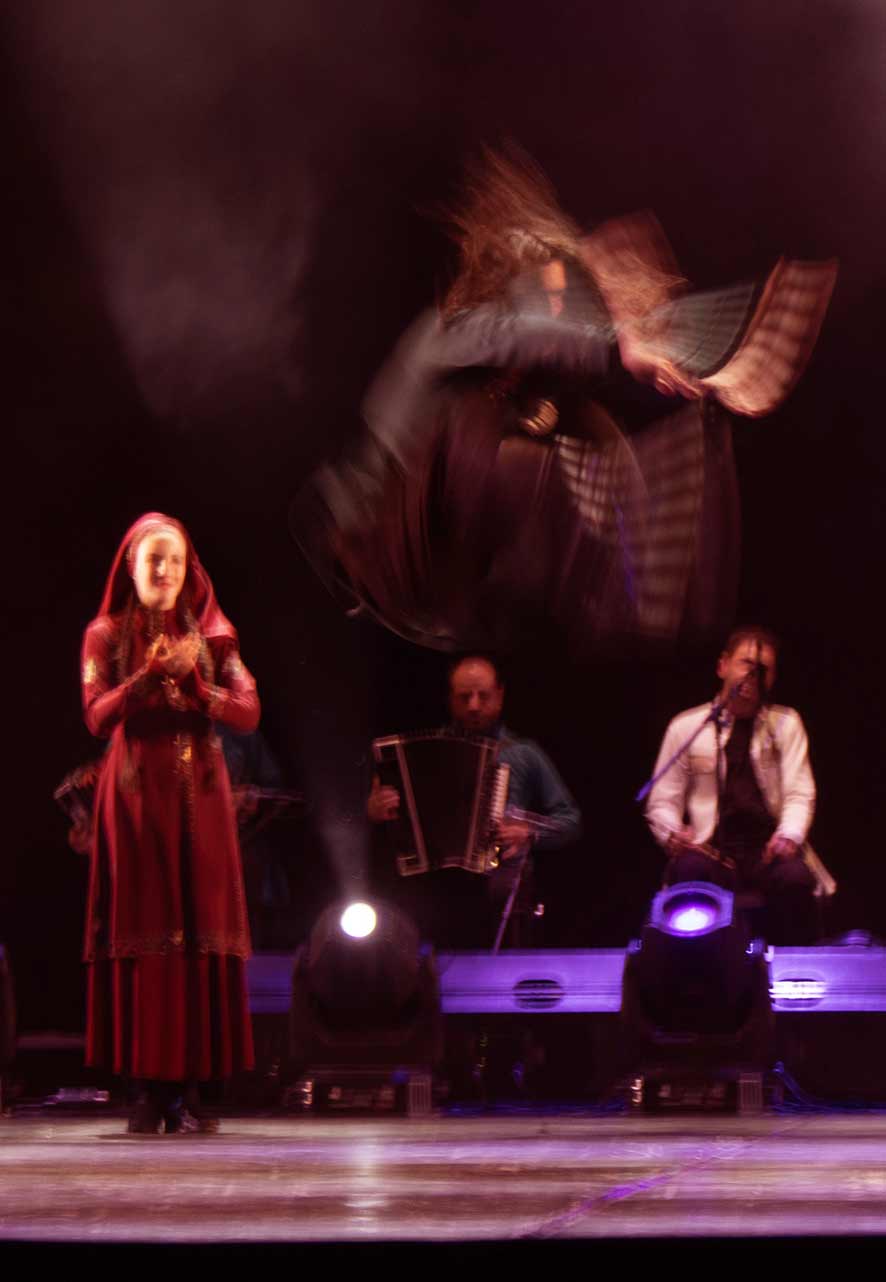
Techniques like slow shutter and panning turn movement into something almost abstract. Parts of the body stay defined, others dissolve into streaks. The result feels closer to memory than documentation – like trying to hold onto a moment that’s already gone.
Even the lighting plays into this aesthetic. Deep shadows, bright highlights, uneven color – instead of correcting them, letting them stay creates a more honest image. Much like in fashion photography, imperfection often adds character.
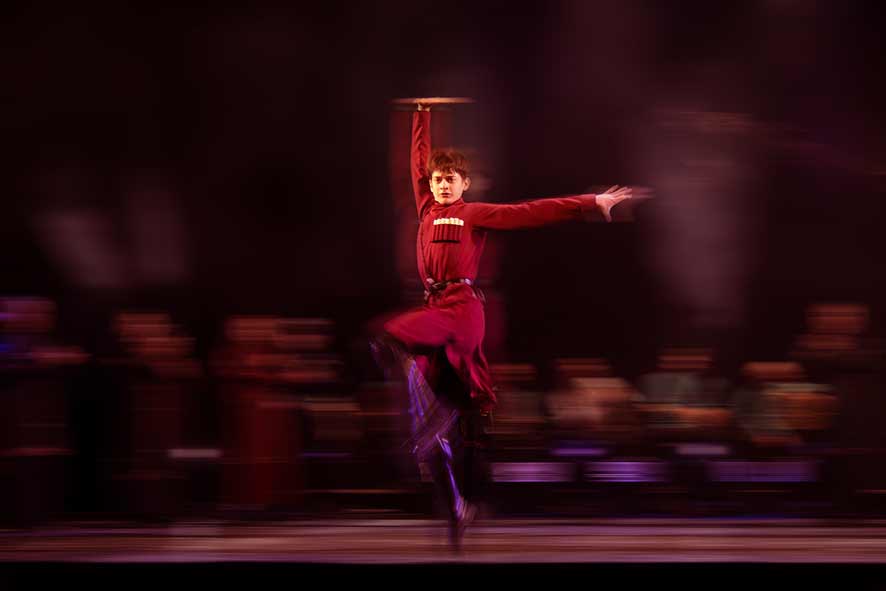
What’s interesting is that documenting the event doesn’t take away from experiencing it. If anything, it sharpens the focus. It allows the eye to notice details – the way fabric moves, how a sleeve catches light, how a formation shifts across the stage.
And that’s where Georgian dance reveals its real power. It’s not just performance – it’s expression at its most intense. Energy, discipline, pride, joy – all layered into one continuous flow.
Even if you’ve seen it before, it never feels repetitive. There’s always something new in the movement, in the styling, in the atmosphere. It’s one of those rare cultural forms that refuses to become familiar.
For anyone trying to understand Georgia, this is one of the clearest entry points. Not through theory, but through experience. Through rhythm, motion, and visual impact.
Because in the end, Georgian dance isn’t just tradition. It’s a living form of style – bold, emotional, and impossible to ignore.