
Tokyo Fashion Week closed the autumn/winter 2026 womenswear season with a strong focus on imagination, craftsmanship, and form. Designers in the Japanese capital explored a wide spectrum of references, from historical dress codes to mythological worlds, while also pushing garments toward sculptural expression.
One of the clearest themes was a return to fashion history. Across multiple collections, silhouettes echoed the 18th and 19th centuries. High necklines, layered constructions, and covered forms dominated, often rendered in restrained tones such as black, ivory, and navy. These looks avoided minimalism by incorporating playful details, including statement headpieces and ruffled collars that softened the strict outlines.
Houga, led by designer Moe Ishida, drew inspiration from experimental Off-Off-Broadway theatre. Her collection featured pieces like a blue pinafore dress layered over a crisp white blouse, combining costume references with everyday wearability.
Meanwhile, Agnès B., founded by Agnès Troublé, presented a refined selection through the “by R” initiative. A standout look included a tailored beige frock coat styled with a tricorn hat, revisiting a silhouette already seen in the brand’s earlier collections.
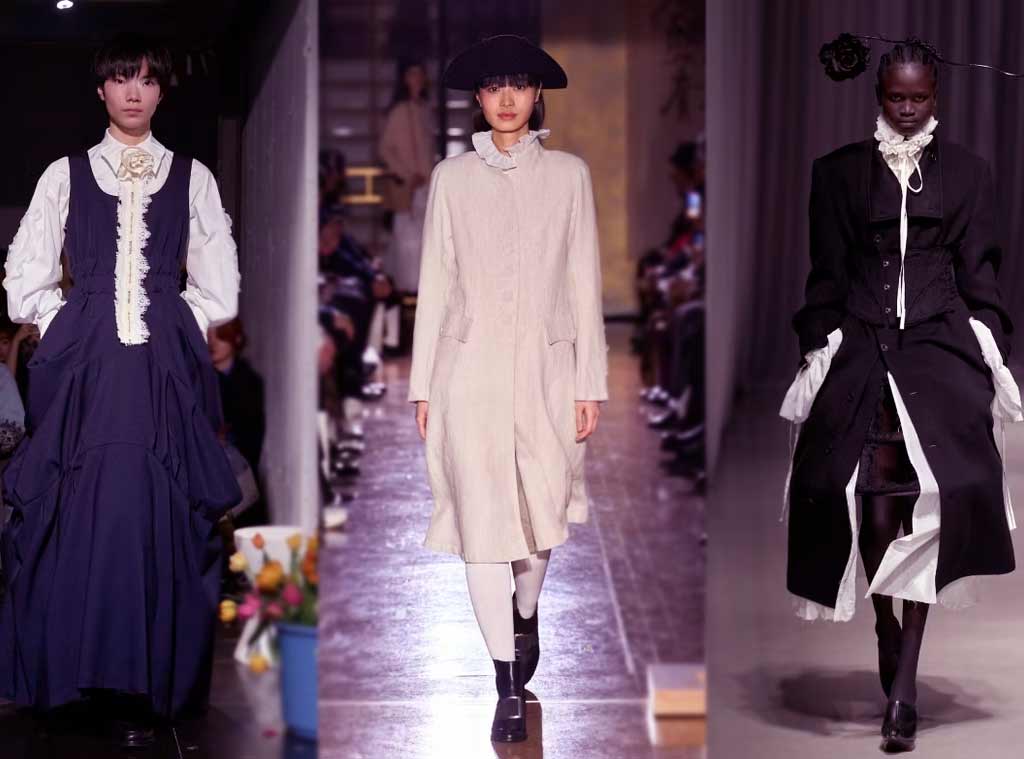
Mukcyen by Yuka Kimura approached history differently, blending it with modern materials. A structured coat, shaped by a corset and layered over a transparent petticoat, illustrated this tension between past and present.
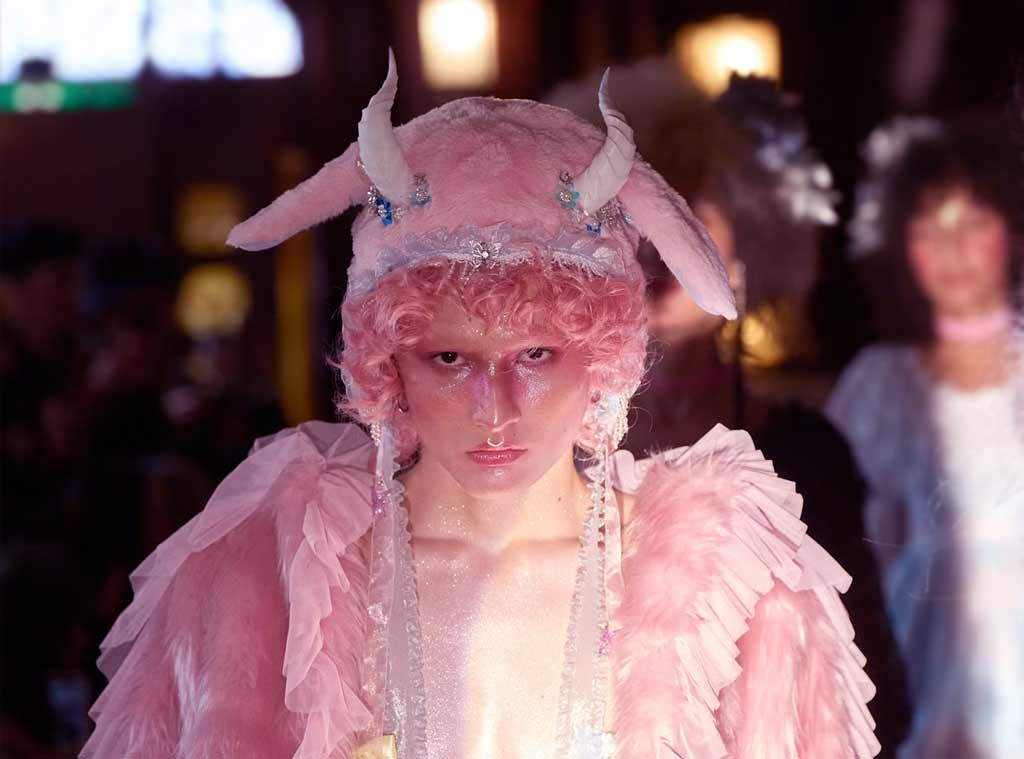
Alongside historical references, a strong fairytale aesthetic emerged. Pays des Fées embraced its identity fully, presenting a collection inspired by mythological creatures and its own archive. Glitter, tulle, and soft color palettes – pinks, greens, and sky blues – created an atmosphere that felt almost otherworldly.
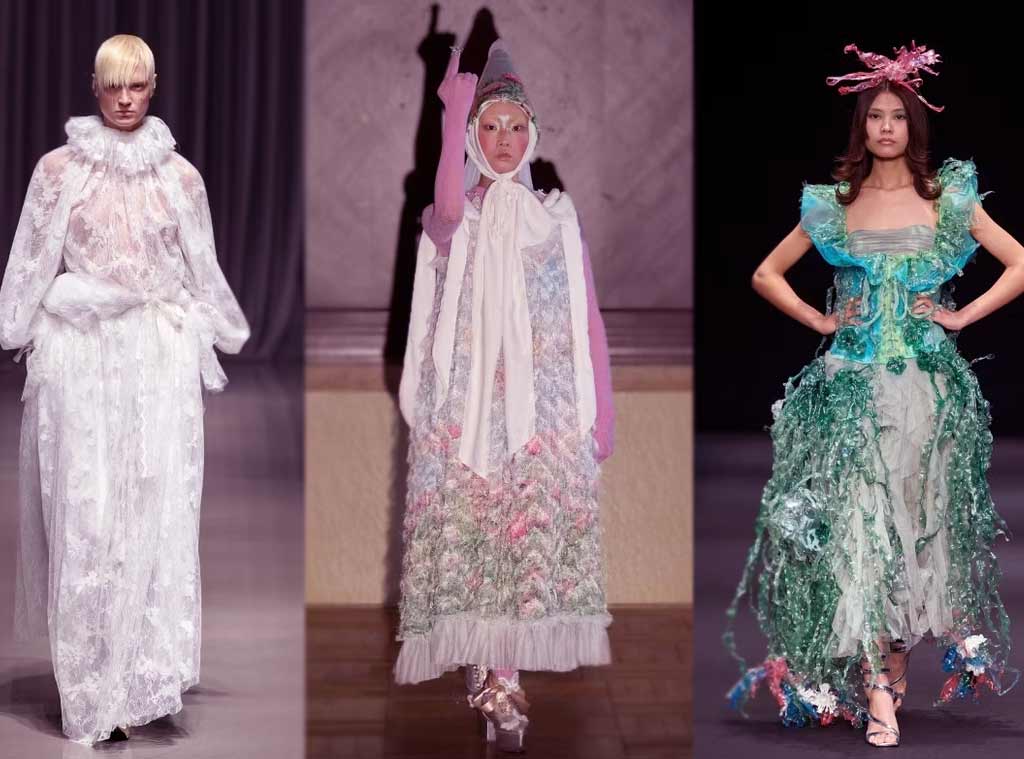
Marika Suzuki explored underwater fantasy, using recycled materials such as plastic and damaged textiles. Voluminous dresses with ruffled textures and translucent layers evoked coral reefs and ocean life, blurring the line between sustainability and storytelling.
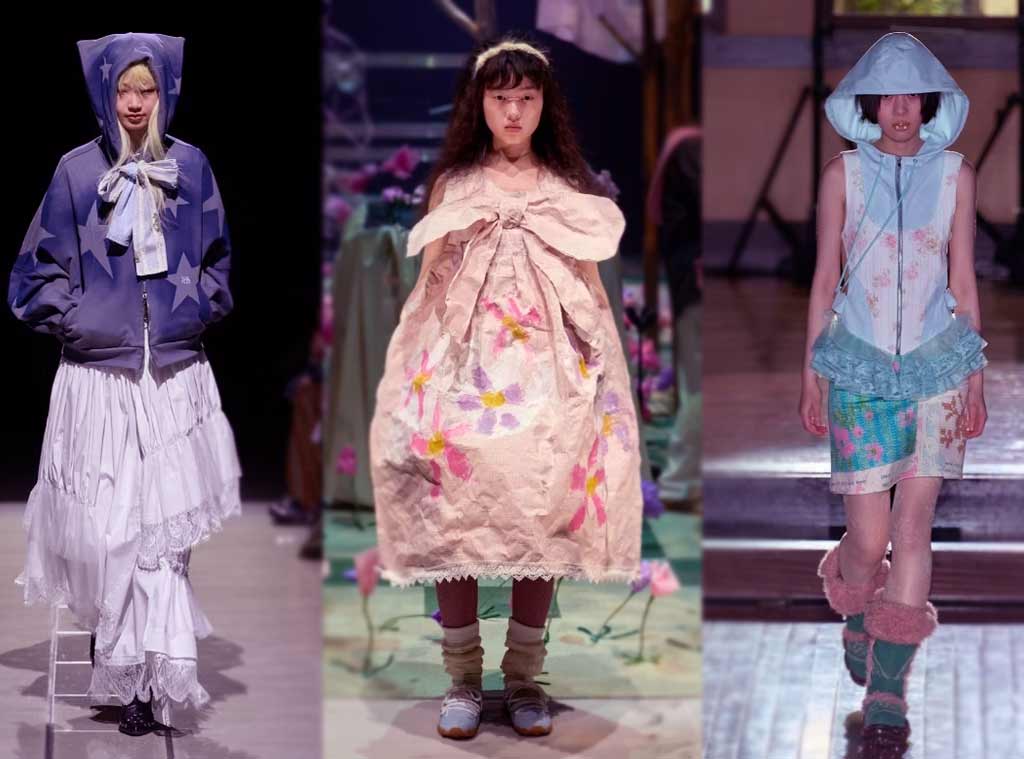
A contrasting direction appeared in the “creepy cute” aesthetic. Designers like Yueqi Qi combined nostalgia with playful distortion, mixing lingerie elements, school uniform references, and bold prints. Pixel motifs and embroidery brought early 2000s visuals back into focus without directly repeating past trends.
Yusho Kobayashi leaned further into this mood, presenting a collection filled with patchwork, crochet, and exaggerated bows. The runway itself became part of the narrative, covered in artificial flowers, reinforcing a dreamlike yet slightly unsettling tone associated with the Japanese “kawaii” and “gurokawa” aesthetics.
At the same time, several designers shifted attention toward pure form. Enföld presented its “Living Sculpture” concept, focusing on curved shapes, asymmetry, and layered construction. The garments felt architectural, prioritizing silhouette over decoration.
Ryunosuke Okazaki pushed this idea further by incorporating wire structures into his designs. The pieces wrapped around the body like visualized movement, creating forms that resembled futuristic armor.
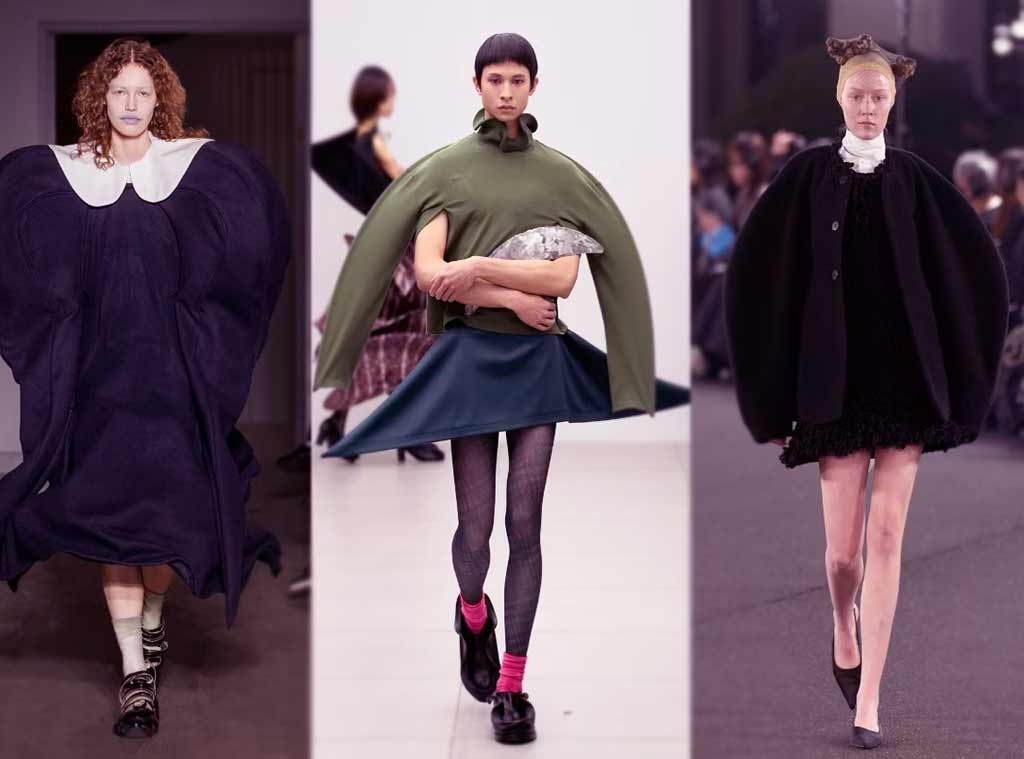
Even footwear and final looks echoed this sculptural approach. Grounds presented a dramatic dress with exaggerated shoulders that extended outward like wings, emphasizing volume and proportion.
Beyond these larger themes, smaller design elements appeared repeatedly. Diamond quilting, often associated with equestrian wear, was reinterpreted in experimental outerwear. Photo prints also emerged as a key motif, ranging from single bold images to collage-like compositions covering entire garments.
Taken together, Tokyo’s AW26 season presented fashion as both narrative and object. Whether through historical references, fantasy-driven storytelling, or sculptural construction, designers demonstrated a clear intention to move beyond conventional clothing and toward something more expressive, immersive, and conceptually layered.