
The Fall/Winter 2026 season brings a clear shift back to bold dressing. Designers are revisiting the visual language of the 1980s, focusing on strong silhouettes, saturated colors, and a sense of confidence that feels direct and unapologetic.
Across the runways, the references are easy to read. Sharp shoulders, structured tailoring, and jewel-toned palettes define the mood. Eveningwear returns to familiar codes as well, with the little black dress reappearing in updated forms. Details are amplified. Bows, draping, and embellishments are deliberately oversized.
This direction recalls the work of designers like Thierry Mugler, Claude Montana, and Azzedine Alaïa, who originally shaped the idea of power dressing. Their influence is visible, but the execution feels current through fabric choice and styling.
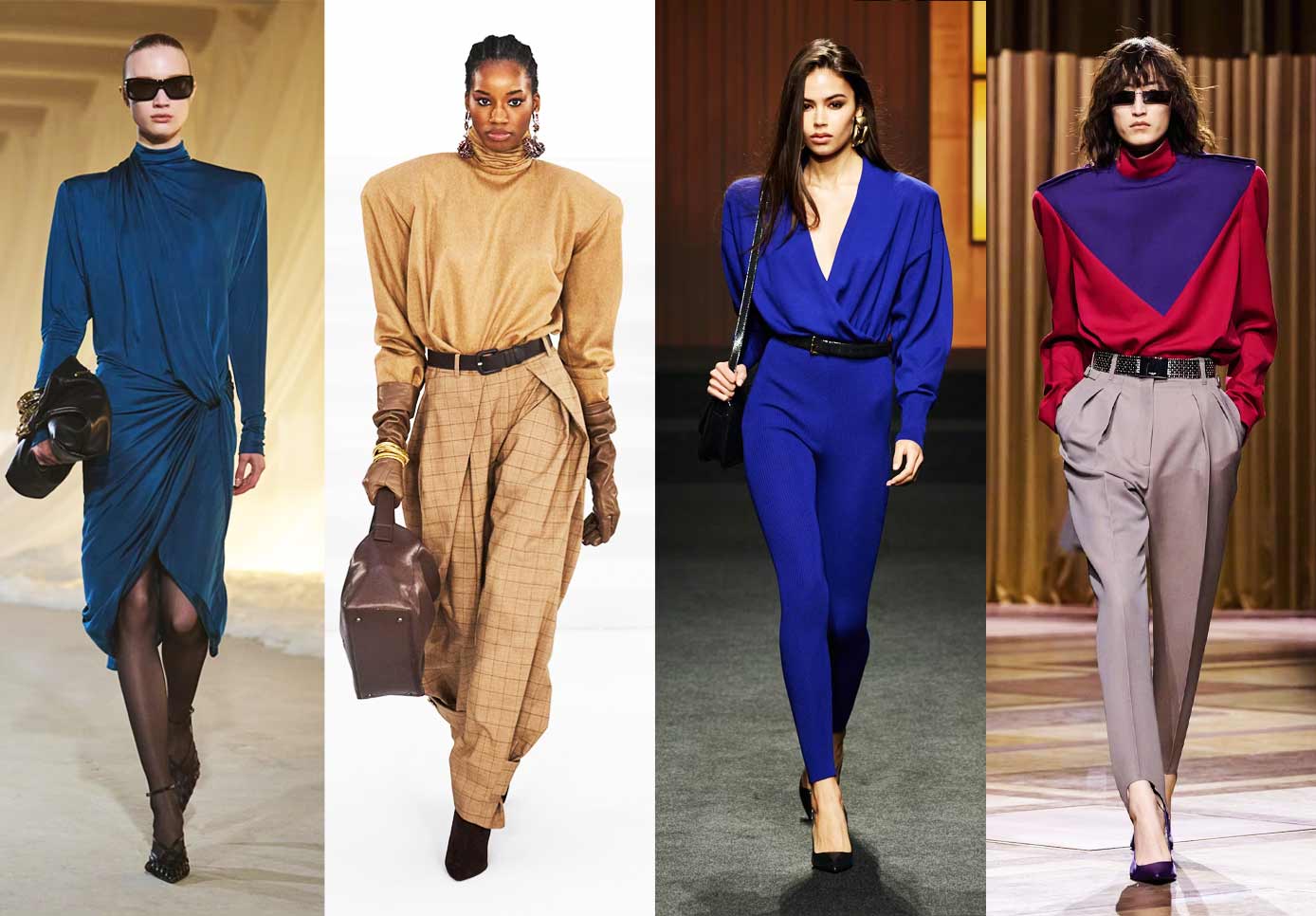
At Balmain, the silhouette is controlled and sculptural. A deep teal midi dress with a high neckline and detailed draping at the waist reflects a balance between structure and fluidity.
William Costelloe approaches the trend through texture. A silk turtleneck with pronounced shoulders is paired with tweed trousers, bringing volume into everyday tailoring.
At Luisa Spagnoli, the look turns more direct. A royal blue jumpsuit with sculpted shoulders and a defined waistline emphasizes vertical lines and clarity.
Mugler pushes the idea further. Strong shoulders, sharp contrasts, and high-waisted silhouettes create a more architectural feel, closer to the original spirit of the 1980s.
Christian Siriano keeps the focus on tailoring. A structured double-breasted blazer combined with wide-leg trousers highlights proportion rather than decoration.
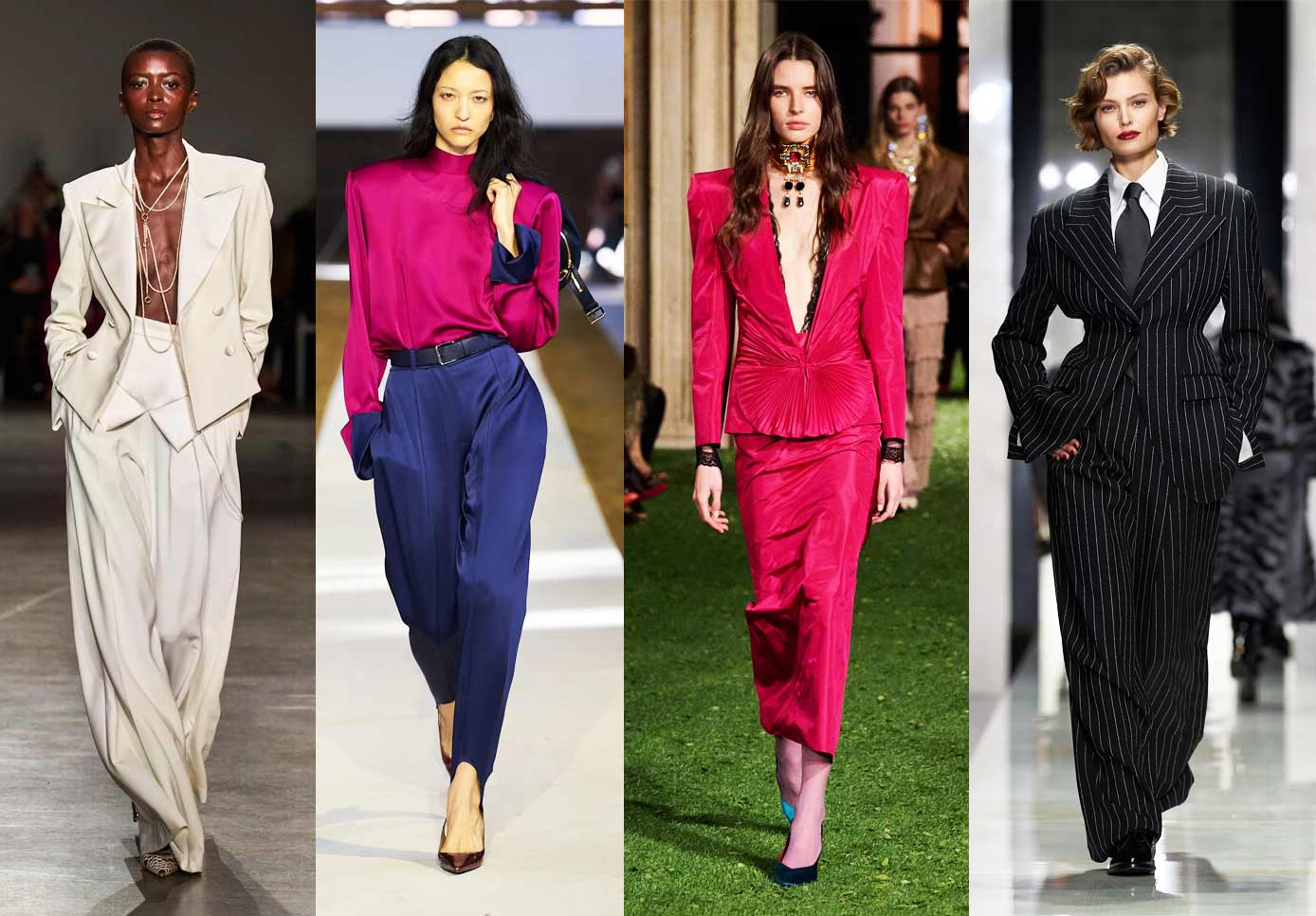
At Stella McCartney, color becomes central. Magenta and navy are paired in a way that feels bold but controlled, with oversized cuffs adding emphasis.
Valentino, under Alessandro Michele, leans into drama. A fuchsia jacket with strong shoulders and a deep neckline is combined with lace and precise tailoring, creating contrast between structure and softness.
Dolce & Gabbana returns to a more classic interpretation. A pinstripe suit with a sharply defined waist references traditional power dressing, but with a relaxed attitude in the trousers.
At Giada, the approach becomes more minimal. Architectural shoulders appear in knitwear, paired with an asymmetric skirt that shifts the silhouette without adding excess detail.
Finally, No. 21 reduces the idea to a single gesture. A black cocktail dress is defined by an oversized bow, turning one element into the focal point.
Overall, the season moves away from subtlety. The message is clear. Structure returns, proportions expand, and clothing takes up space again.