
Fashion is moving further into interdisciplinary territory. A new collaboration between Orlando International Fashion Week and the Orlando International Fringe Theatre Festival makes that shift especially visible.
The partnership is timed with the festival’s 35th anniversary and introduces fashion directly into a space traditionally defined by performance art. On May 16, 2026, OIFW will stage a showcase as part of the festival’s outdoor program. The focus is clear. Designers are expected to present work that leans toward avant-garde, experimental, and forward-looking ideas.
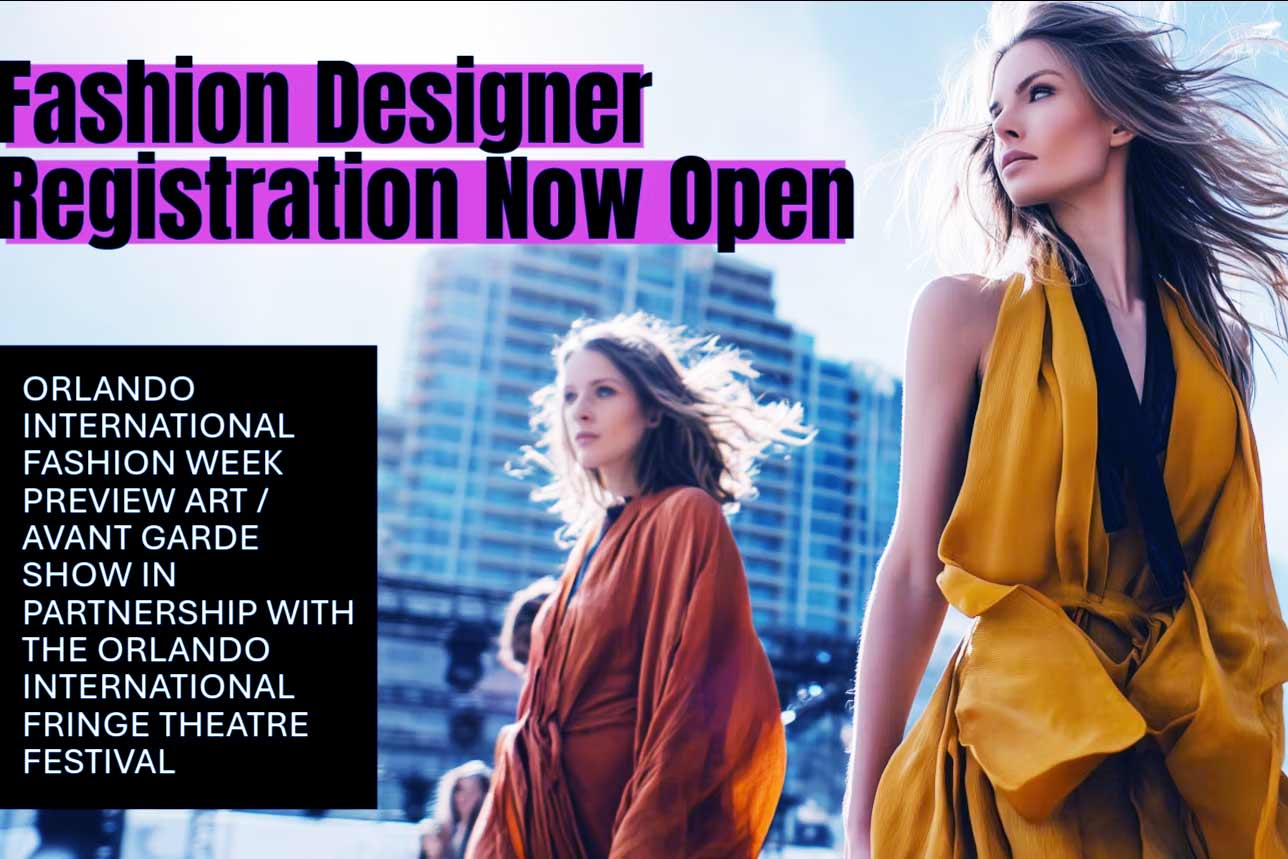
This is not a standard runway format. The setting changes the context. Fashion here becomes part of a wider artistic environment, placed alongside theatre, music, and visual art. The intention is to create a shared platform where different creative disciplines interact rather than exist separately.
According to Rob Henlon, co-founder of OIFW, the collaboration reflects a common approach. Both organizations are interested in giving artists space to experiment and engage with diverse audiences. In this context, fashion is positioned less as product and more as expression.
Designers are currently invited to apply for the showcase. The emphasis is on concept-driven work. Strong visual ideas, narrative elements, and unconventional design approaches are encouraged.
For Tempestt Halstead, the partnership aligns naturally with the ethos of the Fringe festival. The format has always supported openness and accessibility, allowing different forms of art to exist side by side.
The Orlando International Fringe Theatre Festival itself holds a specific place in the cultural landscape. As the longest-running Fringe festival in the United States, it operates on an unjuried and uncensored basis, giving artists full control over their work and returning all ticket revenue directly to them.
From a broader perspective, this collaboration reflects a growing shift in how fashion is presented. It moves away from isolated industry formats and into more fluid cultural spaces.
As John Payne-Rios notes, bringing together fashion, theatre, and community expands visibility and creates new opportunities for artists. It also changes how audiences experience fashion, placing it within a more dynamic and inclusive framework.
In this setting, clothing becomes part of a larger narrative. Not just something to be worn, but something to be performed, interpreted, and experienced.